AI Coding Harnesses Explained for Recruiters: Claude Code vs Codex vs Cursor vs OpenCode vs Oh My Pi
Back in 2023 I made a prediction on this blog:
Any engineer not experimenting with and understanding the capabilities of ChatGPT and other LLM based AI tools is going be a 1x engineer.
Welp… here we are. Except it’s not ChatGPT and autocomplete anymore. The thing everyone is talking about now is coding agents, and the programs that run them, which engineers have started calling harnesses.
If you have noticed job descriptions suddenly asking for “experience with Claude Code”, this post is for you.
What is an AI harness?
There are two pieces to this and people mix them up constantly.
- The model is the AI brain. Claude (from Anthropic), GPT (from OpenAI), Gemini (from Google), etc. On its own a model can only take text in and spit text out.
- The harness is the program wrapped around the model that lets it actually do things on a developer’s computer. Read files, edit code, run commands, run the tests, look at the errors, and try again.
Think of the model as the engine and the harness as the rest of the car. A great engine sitting on the floor of the garage doesn’t take you anywhere.
Here’s what working with one looks like:
- Developer types: “Add a password reset flow to the login page”
- The agent reads the relevant code
- It writes the changes across several files
- It runs the tests, sees two fail, and fixes them
- Developer reviews the changes and ships it (or tells it what it got wrong)
In 2023 the AI suggested the next line of code. Now it does the whole ticket, and the developer acts more like a tech lead reviewing a junior engineer’s pull request.
The big 5 harnesses
Claude Code (Anthropic)
This is the one you are seeing in job descriptions. Claude Code came out in early 2025. It runs in the terminal (the black text window developers live in) and has plugins for the popular code editors.
Why did it take over enterprise? Anthropic’s models have been the favorite of big companies for coding for a while now. Menlo Ventures found that Anthropic had 42% of the enterprise coding market back in mid-2025, about double OpenAI, and that lead has only grown. Anthropic is even hiring people whose entire job is to roll Claude Code out inside big customers.
Keywords you’ll see next to it: subagents, hooks, skills, MCP servers, CLAUDE.md. Those are the knobs power users configure. A candidate who can talk about those has used it for real work, not just a weekend demo.
Codex (OpenAI)
OpenAI’s answer to Claude Code. It started as an open source terminal tool (the Codex CLI) and grew into a desktop app for managing several agents at once, plus cloud agents that work on your code in a sandbox while you do something else.
The big selling point: it comes with a ChatGPT subscription, and a lot of companies already pay for ChatGPT. Teams that are an “OpenAI shop” tend to land here.
Cursor
Cursor is a code editor (a fork of VS Code, the most popular editor out there) with AI built into everything. This is where a lot of developers first got hooked on AI coding. I wrote last year that I use Cursor and I love it.
Cursor has been moving from “editor with AI” to “agent manager with an editor attached”. Cursor 3 shipped this spring with an agent-first interface, and the company now trains its own coding models (called Composer). It’s very popular with frontend developers and anyone who likes watching the code change while the AI works.
OpenCode
OpenCode is the open source alternative. It’s a free terminal agent from the team behind SST (a popular open source developer tool), and the big deal is that it’s model agnostic. Plug in Claude, GPT, Gemini, or open models running on your own machine. You only pay for the AI usage.
Developers who don’t want to be locked into one AI company love it. Companies that care about cost or about keeping code on their own servers are paying attention too.
Oh My Pi
This one is for the tinkerers. It starts with Pi, a deliberately tiny harness made by Mario Zechner (the guy behind the libGDX game framework). Pi gives the AI four tools (read, write, edit, and run a command) and a very short set of instructions, and you add everything else yourself.
Oh My Pi is a fork of Pi by Can Bölük that goes the opposite direction and piles features on top: smarter file edits, subagents, browser tools, and a lot more. One reviewer described it as more of a lab than a finished product, which is about right.
If you see Pi or Oh My Pi on a resume, you are probably talking to someone who goes deep on their tools. That’s usually a good sign.
Cheat sheet
| Harness | Made by | Where it runs | AI models | What it signals on a resume |
|---|---|---|---|---|
| Claude Code | Anthropic | Terminal, editor plugins | Claude | Mainstream, the enterprise standard |
| Codex | OpenAI | Terminal, desktop app, cloud | GPT | OpenAI shop |
| Cursor | Anysphere | Its own code editor | Its own, plus Claude, GPT and others | Likes working in an editor |
| OpenCode | The SST team | Terminal, desktop app | Almost any, including local | Wants control, avoids lock-in |
| Oh My Pi | Open source community | Terminal | Almost any | Tinkerer, power user |
The important part: these skills transfer. Someone who is great with Codex will be productive in Claude Code in about a week. If a hiring manager says “must have Claude Code”, ask if they really mean “must be good at working with AI coding agents”. Usually they do.
Why every JD suddenly says “Claude Code”
A couple of years ago “familiar with GitHub Copilot” was a nice-to-have at the bottom of a job description. Now “experience with Claude Code, Cursor, or similar AI tools” shows up as a requirement, especially at bigger companies.
Part of that is simple: the company already bought the licenses, and they want people who will use them. And leadership is saying it out loud:
- Shopify CEO Tobi Lütke sent a memo in 2025 saying using AI is now a baseline expectation. AI usage went into performance reviews, and teams have to show AI can’t do a job before they get to hire for it.
- Coinbase CEO Brian Armstrong bought Copilot and Cursor licenses, told engineers to get set up within a week, and fired some of the ones who didn’t. He admitted it was heavy-handed.
That’s the extreme end, but the direction is clear.
The problem nobody wants to say out loud
Here is what I keep hearing from engineering managers: their teams are splitting in two.
On one side are the developers who leaned in. They run a couple of agents at once, write a clear spec, review what comes back, and ship features in a day that used to take a week.
On the other side are developers, a lot of them more experienced, who tried Copilot in 2023, got garbage, decided AI was hype, and never looked again. Some of them are pretty hostile about it.
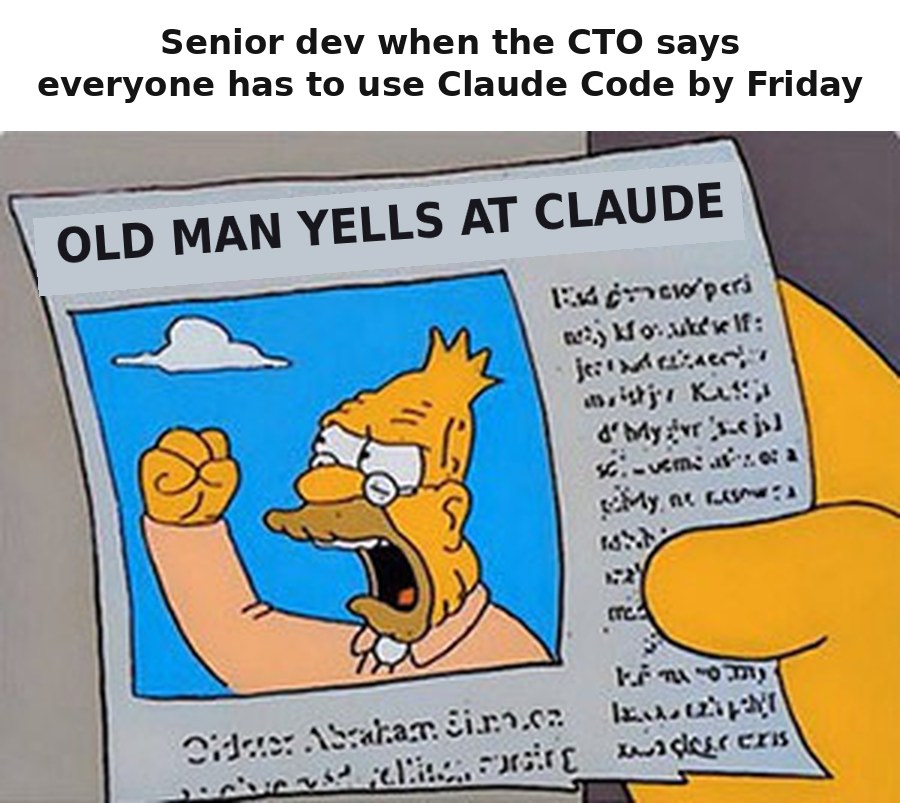
Employers are getting frustrated. When one engineer is shipping a lot more than the person sitting next to them, and the main difference is “was willing to learn the new tool”, that’s a really uncomfortable conversation for a manager to have.
To be fair to the skeptics, it’s not as simple as old vs young:
- A Fastly survey found that developers with 10+ years of experience were more than twice as likely as juniors to ship mostly AI-written code (32% vs 13%). Plenty of senior folks are all in.
- A study by METR found experienced open source developers were about 19% slower using AI on codebases they already knew inside and out, even though they felt faster. That was with early 2025 tools, which have gotten a lot better since, but the skeptics aren’t crazy.
So the real divide isn’t age. It’s curious vs stuck. A senior engineer who learned these tools is the most dangerous person in the building, because they know what good code looks like and can tell the agent when it’s wrong. The ones who refused to try are falling behind fast.
What this means for recruiters
Questions for the hiring manager
- Which harness does the team use? Is it a hard requirement, or would Codex, Cursor or OpenCode experience be fine? (It almost always is.)
- Are developers even allowed to use AI on the codebase? Some regulated companies (banks, defense, healthcare) still restrict it.
- How much do they expect new hires to use it? “Uses it sometimes” and “runs agents all day” are very different jobs.
Questions for candidates
- “Which AI coding tools do you use day to day, and why that one?”
- “Walk me through the last feature you built with an agent. What did it get wrong, and how did you catch it?”
Green Flags 🟢
- Can name their tools and has opinions about them (“I use Claude Code for big refactors and Cursor when I want to watch the changes as they happen”)
- Talks about reviewing, testing and fixing what the agent wrote
- Mentions setup like project instruction files, subagents, MCP servers, or running several agents in parallel
- Has tried more than one tool
Red Flags 🚩
- “I don’t use AI, it just writes garbage” in 2026, especially if the last time they tried it was years ago
- The opposite problem: can’t explain the code the agent wrote for them (the vibe coder)
- Lists every AI tool on the resume but can’t describe a single real workflow
Summary
- The model is the brain, the harness is the program that lets it actually do work.
- Claude Code is the enterprise default right now, Codex is right behind it, Cursor is the favorite for people who live in their editor, and OpenCode and Oh My Pi are for developers who want more control.
- Treat “Claude Code required” as “good with AI coding agents required”.
- The developers who leaned in are pulling ahead. Screen for it.
If you want to learn the rest of the jargon your engineers are throwing around, that’s exactly what my course is for. And as always, feel free to reach out if you want to chat about this stuff!
- Aaron
Want updates?
Want new posts about tech topics emailed to you? Sign up to the list below 👇
Also, if you are interested in learning technical topics through a video course specifically created for recruiters, don't forget to check out the courses I offer.
The main course "How to Speak Software Engineering Jargon for Recruiters" is specifically designed to help tech recruiters get up to speed fast on technical topics.
Written By Aaron Decker